
Not having lived in any sort of actual monarchy, the thought of being subject to the reign of a king is unfamiliar to me, and I think most of us alive at this time.
As I mentioned in Part One: A Better Parent, however I perceive God now, he continually shows me with each new glimpse of him that he’s always better. I used to think God’s reign, his “sovereignty,” holiness, and separateness were chasms that, yes, were bridged by Jesus, but still indicated his remoteness from me. But I’ve learned he’s better than that. I now think that his throne is and always was one of his continual bending down to meet me where I’m at.
In Isaiah chapter 16, there’s an image of a throne that Isaiah perceives will arrive in the future. There is something telling in this passage that has helped shift my view of God yet again. Prophets are not future tellers necessarily. One definition I’ve read says, A biblical prophet is one who lives on the edge of organized religion as a truth speaker, and yet from the loving and experienced depths of that religion. He cannot be throwing rocks from outside but must “pay his dues” and earn the right to speak.
Isaiah prophesies repeatedly about the sins, guilt, and looming downfall of Israel. Many are probably familiar with the prophecies of the coming Messiah that are scattered throughout this Old Testament book. I wonder if, like for many of us in our darkest times of suffering, anchoring to the truth that Jesus has come, is here, and will come, was God’s gift to Isaiah and his people to hold on to hope even in the midst of despair.
Then we come to one of these moments of Isaiah’s prophetic poetry when, from my perspective, he looks beyond current circumstances, current suffering:
“When the oppressor is no more, and destruction has ceased, and marauders have vanished from the land, then a throne shall be established in steadfast love in the tent of David, and on it shall sit in faithfulness a ruler who seeks justice and is swift to do what is right.” -Isaiah 16:4-5
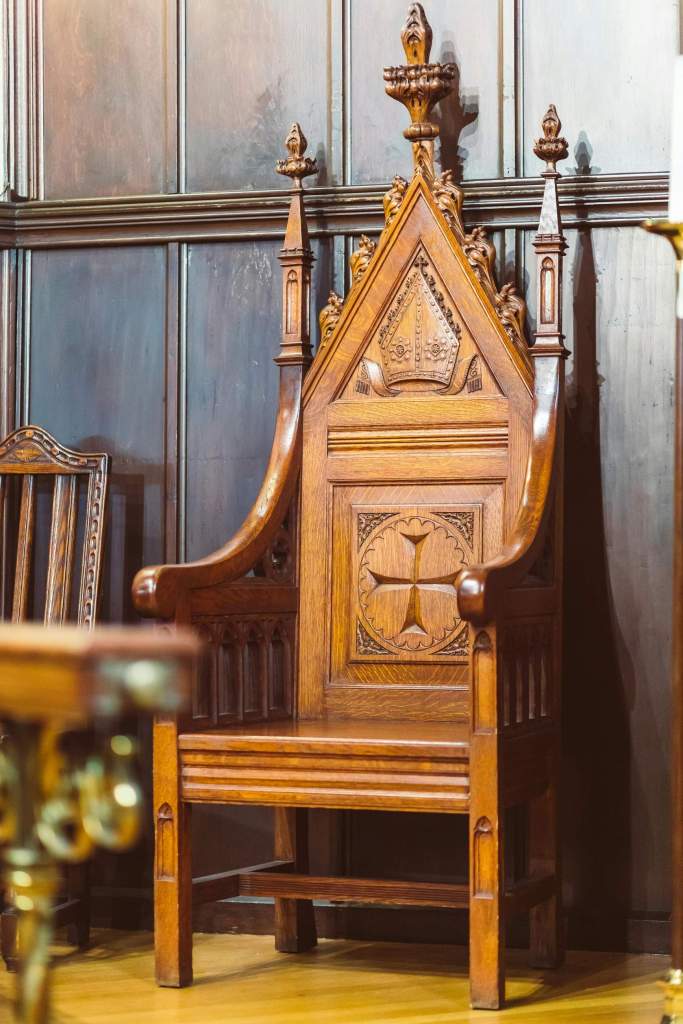
Another version says, “oppressors have completely disappeared from the land. A throne will even be established in lovingkindness.” (NASB)
This phrase steadfast love is like a thread God has woven throughout Scripture, manifested in Jesus. The Hebrew word for this phrase is hesed, and it occurs about 250 times in the OT. You’re probably familiar with its various translations: steadfast love, lovingkindness, mercy, and some scholars call it covenant love. One author I’ve read suggests hesed could be translated as attachment.
In my work of creating educational materials for foster parents, we constantly come back to this concept of attachment. In Part One, I noted that God has taught me he is a better parent than I once perceived. This throne of hesed, his attachment to me and you, is the essence of what kind of parent he is.
A large portion of the educational material I write for foster parents centers around patient, enduring, delight and love in children, even when, especially when children’s behaviors are so, so hard. Trauma puts the brain in a state of hyperarousal, of fight or flight, even when the traumatic event has passed. The brain does not have the skills to “regulate” without the safe, lovingkindess, of another, without hesed. So, while structure and boundaries are important in any family, it is not programs or punishments or charts that could rewire and heal a child’s brain. It is this, hesed, loyal, unconditional care for the well-being of another that literally rewires the traumatized brain. Children can live in regulated peace rather than constant fear and distress. Healing cannot occur in isolation; it occurs in loving attached relationships.
So, when we see this in Isaiah-right smack dab in the middle of proclamations of looming destruction, I believe that God is showing us through Isaiah that he is always, always in the business of reconnecting individuals to himself and to each other, and even groups and nations. I want to highlight three beautiful insights of his hesed steadfast loving attachment from this passage.
1) Oppressors have completely disappeared from the land. God is in the business of removing obstacles in the way of our loving hesed attachment to Jesus and to one another.
It is telling that many people, when they come to Jesus, have a story about being set free from an addiction, way of life, relationship, or perspective that kept them oppressed, and that it was God who set them free.
I’ve also experienced that sometimes the “oppressors” of this life-grief, trauma, illness, pain, relationship dysfunction, struggles with addictions, struggles with mental health-these things may remain in some form for many of us. But in Christ’s incarnation HE BECOMES THE ONE WHO CARRIES OUR BURDENS. He does not wait; as we wait for the redemption of eternity when truly all oppression ceases, Jesus is completely attached to us through everything we go through. His hesed carries and ties us to him even when our land is being destroyed all around us.
2) A throne established in hesed. This is not a throne of power or subjugation but of loving reciprocal attachment. I think we’re at an exciting time in the story of God’s love for humanity. We know unfortunate historical truths about many in power in religious Christian structures who in centuries past thought they were doing God’s will by waging war on “pagan” nations, executing heretics, etc. For generations, God was made in man’s image-a mighty, punitive ruler who was quick to punish. But who he’s always been is best seen in picture of a father with hesed unconditional lovingkindness sitting alongside his children.
3) And on it shall sit in faithfulness a ruler who seeks justice and is swift to do what is right. God’s justice flows out of his attachment toward us. Our culture tends to define justice as vengeance. But God’s justice is a lot less “fair” than that. His mercy is the justice that sets things right.
My son in heaven, Elliot, would be turning 8 years old this spring. A lot of my walk with God centers around my journey through the grief of his unexpected death when he was five days old. Years ago, on his 11-month birthday, I felt compelled to visit the hospital where I lived for two months on bedrest trying to save him from my broken pregnancy. That hospital was and still is filled with such a visceral reaction, all the love and hope and joy of him and the trauma of losing him. It was a ritual for me to go one more time to remember, to see the nurses who’d cared for Elliot and me.
After my visit to the hospital, I was driving our giant Ford truck, weaving through little downtown streets, on the way to the cemetery to visit my son. I wiped tears that wouldn’t stop as I drove and then heard a THWAP! My stomach sank. I had hit a parked vehicle.
I parked and walked back to leave a note and my information. I saw that my side mirror had hit another car’s side mirror and knocked it clean off. I picked it up where it was lying in the street, even as my unstoppable tears poured more freely. I started writing my note to leave on the car. Then I saw a family walking my way. I still remember the look of angry disbelief on the guy’s face as I stood there with a yellow legal pad in one hand and their busted side mirror in the other. I began stammering my apologies but couldn’t stop crying. The husband interrupted me, saying, “Ma’am, are you okay?”
I totally lost it when he asked me that! I overshared and told them I’d been at the hospital where my son died, I was going to the cemetery to visit him now, and then sobbed more. Suddenly the wife’s arms were around me. She held me and said, “I’m so sorry.” When she let me go, I tried to give them my information, tried somehow to make amends. Then the man’s anger had disappeared and was replaced by compassion. He said, “It’s okay. We don’t want anything for it. It’s okay.”
So the question is—was justice accomplished that day? If justice means that things were set right, then I think so. Their mercy set things right. That’s the kind of justice God offers. Not punishment, not vengeance. God’s proclamation of compassion here through Isaiah hits me hard. His throne is unconditional love! Am I like that? Like the people who showed me only mercy and compassion? In the end, do I want to show utter grace, outflowing from my hesed attachment to God’s loving kindness, to even the enemies and wrongdoers of the world? I hope so. He shows it to me; others have shown it to me. I mean, that is the whole embodiment of Christ: While we were still sinners, Christ died for us. Romans 5:8
It is an inalterable attachment of God to you and you back to him that sustains you. Then it flows from you to others. Let’s hear each other’s stories and live in that awareness of a throne that is established in hesed love, attached to us and granting us the justice of mercy.

 Raw and Filtered
1 thought on “God is Better Than You Think, Part Two: A Better Throne”